
A Brief Look at Multiculturalism in the Deccan Sultanates8 min read
Reading Time: 6 minutesThe history of the Deccan Sultanate presents a mosaic of different cultures and a surprising cosmopolitanism with cross-cultural relationships, multilingualism, fluid religious categories, and traditions born out of interactions of various cultures. As Manu Pillai writes in his book Rebel Sultans,
“The Deccan, to the world, was uniquely Indian, to India, however it was a mirror of the world.”
When tracing the history of Deccan, one of the many surprising things can be its complex and multicultural society. People from Persia, France, Britain, Portugal, Central Asia, and Africa all found their way to the region, some seeking trade, others to conquer the area, all eventually calling Deccan home. The region became a melting pot of not only cultures but also opportunities for social mobility and recast pedigrees.
Therefore, as Richard Eaton asks in the chapter on the history of the Deccan from 1500-1700 in the book, Sultans of Deccan India, “Which different cultures were represented in the mosaic of the people then confronting the mighty Mughals?”
They Came, They Saw, They Stayed
It would be remiss to talk about the varied culture of the region without mentioning the Persians who migrated to Northern India in the early fourteenth and fifteenth centuries and then moved to the Deccan. The impact of Persian literary and aesthetic traditions on Deccani art can perhaps be traced to the influences of these immigrants. And, of course, the region was home to Deccan-born Muslims with their own unique cultural and linguistic identity.
The Deccan was the cynosure of many overseas influences, especially with ports on both coasts, making the region a commercial hub. Chaul, Dabhol, and Goa connected the Deccan to the Middle East, and Masulipatnam connected it to Southeast Asia.
In his book, Rebel Sultans, Manu Pillai writes, “The Deccan, as we know, had long attracted foreigners to its shores, offering them wealth and a future in these eastern lands. Persians arrived, as did Arabs and Central Asians. Some graduated to princely ranks, while others soared to aristocratic heights. But among the legions of mens absorbed by the Bahamanis and their heirs were also Africans who came primarily from the land we now call Ethiopia. And they too would thrive in the Deccan far above the stations where they began their lives.”
During the Bahmanid Sultanate, due to trade links with Abyssinia (present-day Ethiopia), many Habshis (derived from the Arabic term for Abyssinian) arrived as merchants, fishermen, and slaves and settled in the region. Sidi (my lord, derived from Arabic) was often used for the same group but hinted at an elevated status.
One of the most well-known historical figures from the community is Malik Ambar. Born in Ethiopia, sold as a slave in Baghdad, he was purchased by Chengiz Khan, a former Habshi slave and chief minister of the Sultanate of Ahmadnagar. Upon the minister’s death, Ambar was freed. He built an army of African ex-slave soldiers and was the pioneer in guerrilla warfare in the region. He was so influential that when the Sultan of Ahmadnagar died, he placed his candidate on the throne, becoming the kingdom’s Regent.
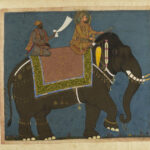
Another well-known historical figure is Malik Raihan Habshi, or Ikhlas Khan of Bijapur, a freed slave who grew up serving Ibrahim Adil Shah II. When the latter’s son, Muhammad Adil Shah, assumed the throne, Ikhlas Khan became a commander of troops and advisor to the Sultan. He was also named governor of a province bordering Golconda.
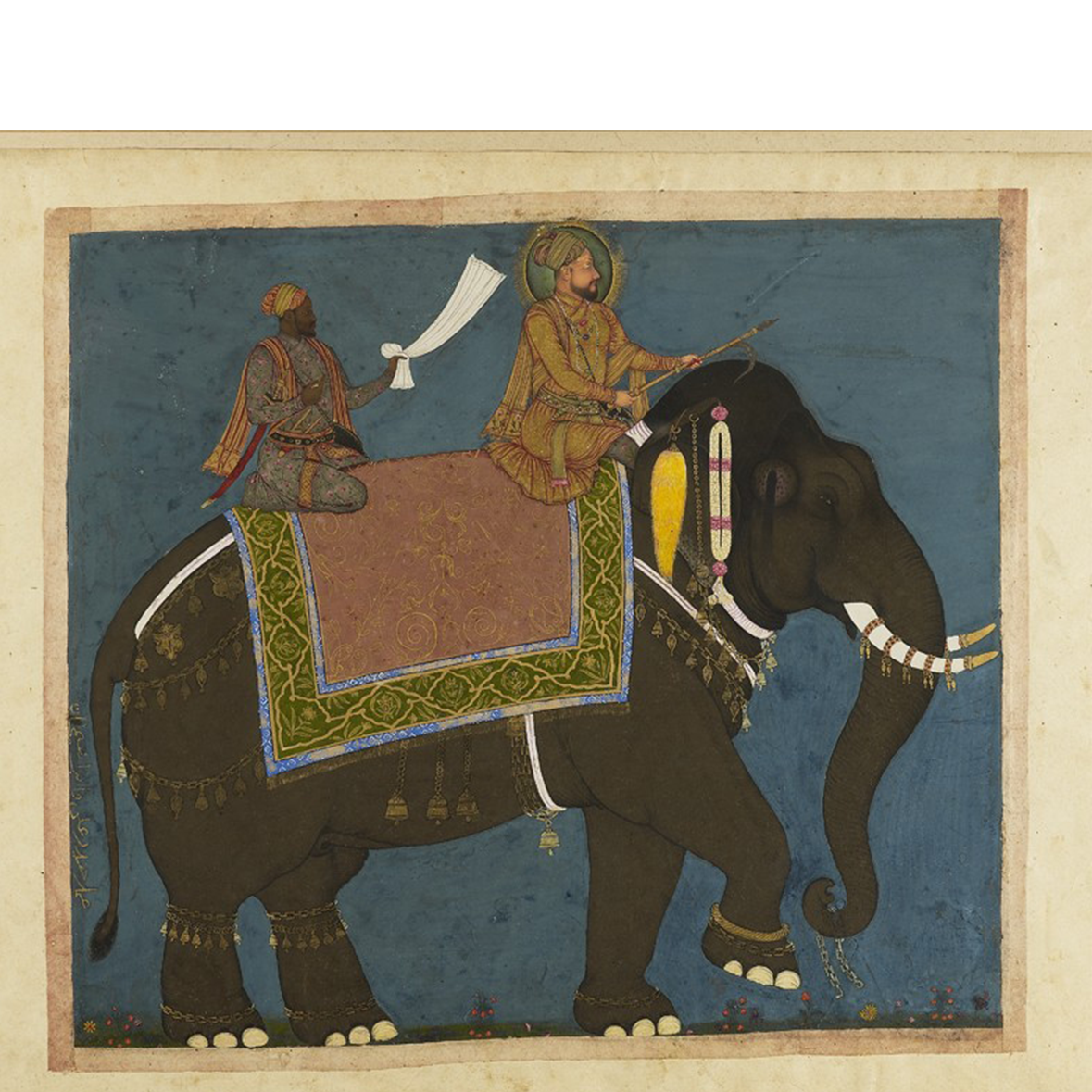
Another group that rose to prominence in the Deccan was that of the Marathas. Eaton writes in Sultans of Deccan India that “Sultan Ibrahim Adil Shah I of Bijapur hired thirty thousand Maratha cavalry and by 1624 Ahmadnagar had enlisted forty thousand Marathas into its services-figures that reveal the extent to which the sultanate form of governance, initially alien to India, had meshed with local Deccan societies.” He also writes that in eastern Deccan, “Telugu warriors known as nayakwaris, whose martial traditions reached back to the Kakatiya dynasty, played an analogous role in Goclonda’s army and political system.” Both these military service groups had cultural influences that seeped into the upper echelons of Deccan courts.
Religious Diversity
Deccan history is often inaccurately reduced to a battle of religions; Hindus versus Muslims. Pillai expands on this in Rebel Sultans, “The Hindus did not unite as one to challenge Muslims, nor, with their own feuds and internal dissensions, were the Muslims of the north a single consolidated block, baring fangs and victimising Hindus en masse before supper.”
The Sultanates and the Vijayanagar empire, often at odds, borrowed from each other’s culture and people.
Devaraya II, the Vijayanagara emperor, supposedly enlisted Muslims in his service, erected a mosque, and even ordered a Koran to be placed before his throne so that Muslims in his court could perform the ceremony of obeisance in front of him without sinning. Before him, the Hoysalas also employed Muslims in their armies. Yes, an alliance of Deccani Sultanates defeated the Vijayanagar empire, but Hindi Telugu chieftains allied with the Bahmanis against the Vijayanagar empire.
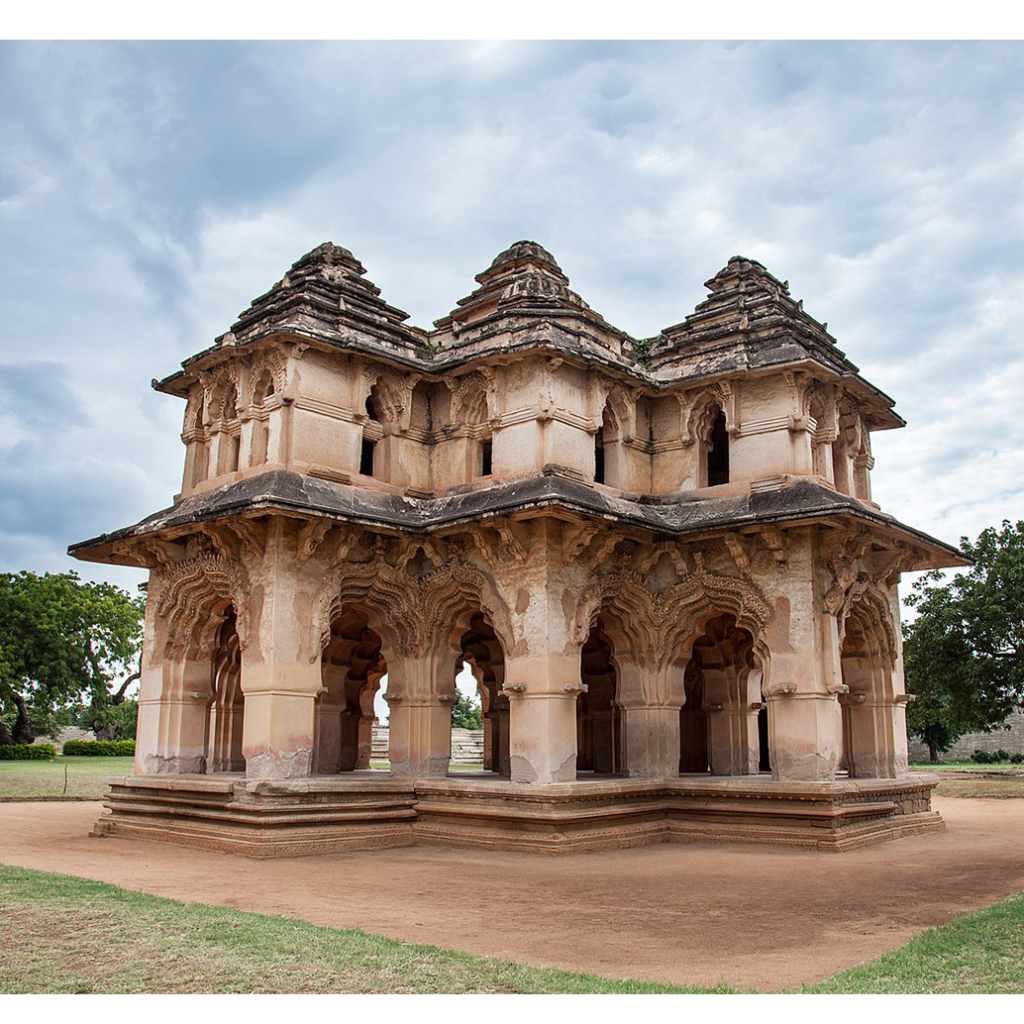
And this co-existence of faith is evident in art and architecture from both cultures.
The many temples in Hampi, the capital of Vijayanagar, showcase classic Dravidian temple forms, but royal palaces and audience halls have pointed arches and domed roofs reminiscent of Sultanate buildings.
And many arts of the Sultanate echo Hindu influence, like the unique Deccani style of Pichhavai that emerged when Gujarati and Rajasthani merchants who migrated to the region commissioned local artisans to make these paintings on a cloth to place behind idols in shrines. Or Persian translations of Hindu religious manuscripts like that of the Bhagavata Purana.
Eaton also writes that “in sharp contrast to northern India under the Mughals, Brahmins figured prominently in the administration of the Deccan sultanates. In Golconda the Niyogis were the worldly Telugu Brahmins who had given up their caste’s traditional priestly role to serve in the state’s administration… In Bijapur, beginning in 1535, Brahmins effectively ran the revenue administration at all tiers.”
Linguistic Commingling
Maybe the best way to explain the linguistic harmony of the Deccan is to quote Ibrahim Adil Shah, who wrote, “Our tongues differ but our feelings are the same, Whether we are Turk or Brahmin, The most fortunate person is the one, On whom Saraswati smiles, Ibrahim says, the world seeks knowledge, Be focused on the Word, on the guru, on meditation.”
Originally, the native languages of the Deccan were Marathi (Indo-Aryan) in the north-west and Kannada and Telugu (both Dravidian) in the south-west. But with a cosmopolitan culture, developed a cosmopolitan language.
No wonder then that when we speak about the linguistic history of Deccan, the first language that comes to mind is Deccani, a language that adopted the Perso-Arabic script and developed as a natural fusion of Persian, Old Urdu, Kannada, Marathi, and Telugu. Dakhni was a living, growing language that borrowed from and lent to languages around it. And since it combined elements of the various languages of the Deccan, it was designed to communicate across communities and classes.
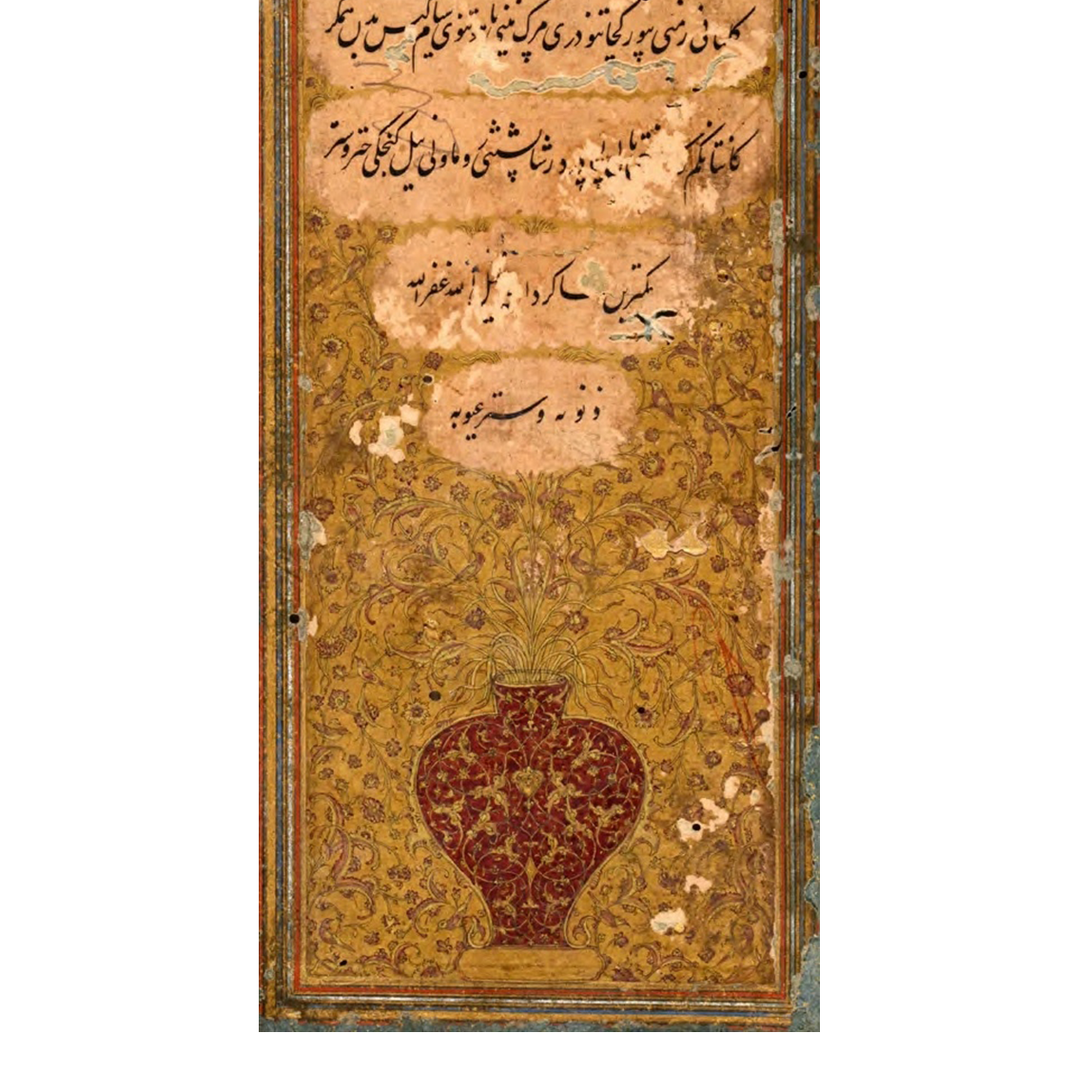
The golden age of Dakhni poetry was under the patronage of the Sultans of Golconda and Bijapur. While it started as a spoken language, by the 17th century, Deccani had transformed into a literary language. The earlier writers of Dakhni were saints and divines of Islam, well versed in mysticism and mystical literature of the Persian language.
Another linguistic phenomenon was the influence of Persian on Marathi. This was the direct outcome of the social and cultural relationships between the region’s Muslim rulers and Hindu subjects. Persian was the court language.
Persian heavily influenced Marathi language from the era. The first exact sign of Persian influence on Marathi is seen in a Marathi inscription from the Bhimeshwar temple located south of Bombay, incorporating Persian (including Arabic loanwords therein) words such as sāzgār (harmonious), jamʿiyat (crowd) and hejrat (exile, departure).
Marathi also gained importance in the judicial system of Bijapur in the early seventeenth century, which was run primarily by Brahmin councils and would hear disputes in Marathi.
The many influences that shaped the Deccan, Chalukya, Persian, Deccani, Nayakwari, Marathi, Habshi, and others made it a dynamic, diverse, and cosmopolitan region entirely unique in the world it inhabited.
Sources
- Pillai, M.S. (2018). Rebel Sultans The Deccan from Khilji to Shivaji. Prithvi Prakashan
- Haidar, N.N., & Sardar M (2015) Sultans of Deccan India 1500-1700. Yale University Press
Images
- Sultan Muhammad Adil Shah and Ikhlas Khan Riding an Elephant ca. 1645, The Ashmolean Museum, University of Oxford. Lent by Howard Hodgkin
- Lotus Mahal, Hampi, Karnataka, Shivajidesai29, Wikimedia Commons, CC BY-SA 4.0
- A folio from the Kitab-i-Nauras, the book of Nine Rasas comprising verse in Dakhni composed by Ibrahim Adil Shah II; 1600/1630; Bijapur, Deccan; National Museum, New Delhi
Warning: Array to string conversion in /home/nbize4ofxrbr/public_html/blog/wp-content/plugins/neori-social-share-buttons/neori-social-share-buttons.php on line 37
Array