
Fauna in Motifs: Studying them in the Textiles, Jewellery, and Art of the Deccan9 min read
Reading Time: 7 minutesFragments of nature have always been a source of inspiration for creators; from painters to poets, architects to jewellers and even weavers, flora and fauna are recurring themes. Often referred to as the most basic unit of design, motifs not only have symbolic meaning associated but can often also be a source for cultural context.
Development of a motif did not necessarily happen in isolation or one art form. You can often spot the same motif in different art pieces from the same era, painted, sculpted or woven.
In a continuing series, we look at some motifs that have made an appearance time and again in treasures from and of the Deccan region of India. This article looks at fauna, both real and mythical, as motifs.
Peacocks
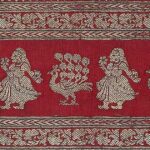
The peacock motif is prevalent in many Indian textiles. The enduring popularity of the motif can be traced back centuries. In the article, “Why Are There So Many Peacocks in India’s Arts, Culture, and Legends?” for Fodors.com, Sharon McDonnell spoke to Kamini Sawhney, the director of the Museum of Art & Photography in Bengaluru, who says, “The peacock has been a potent symbol in Indian art across different time periods, genres and mediums, from its earliest traces in painted prehistoric rock shelters and sculptures in the Indus Valley Civilization [2,500-1,500 B.C.] to Mughal miniature paintings to today. Peacocks are in Hindu epics like the Ramayana and Mahabharata and the Rigveda, India’s oldest sacred text [written around 1,500 B.C. in Sanskrit]” She goes on to say, “Peacocks are associated with royalty and grandeur, so you often encounter their imagery in many Indian textiles.”
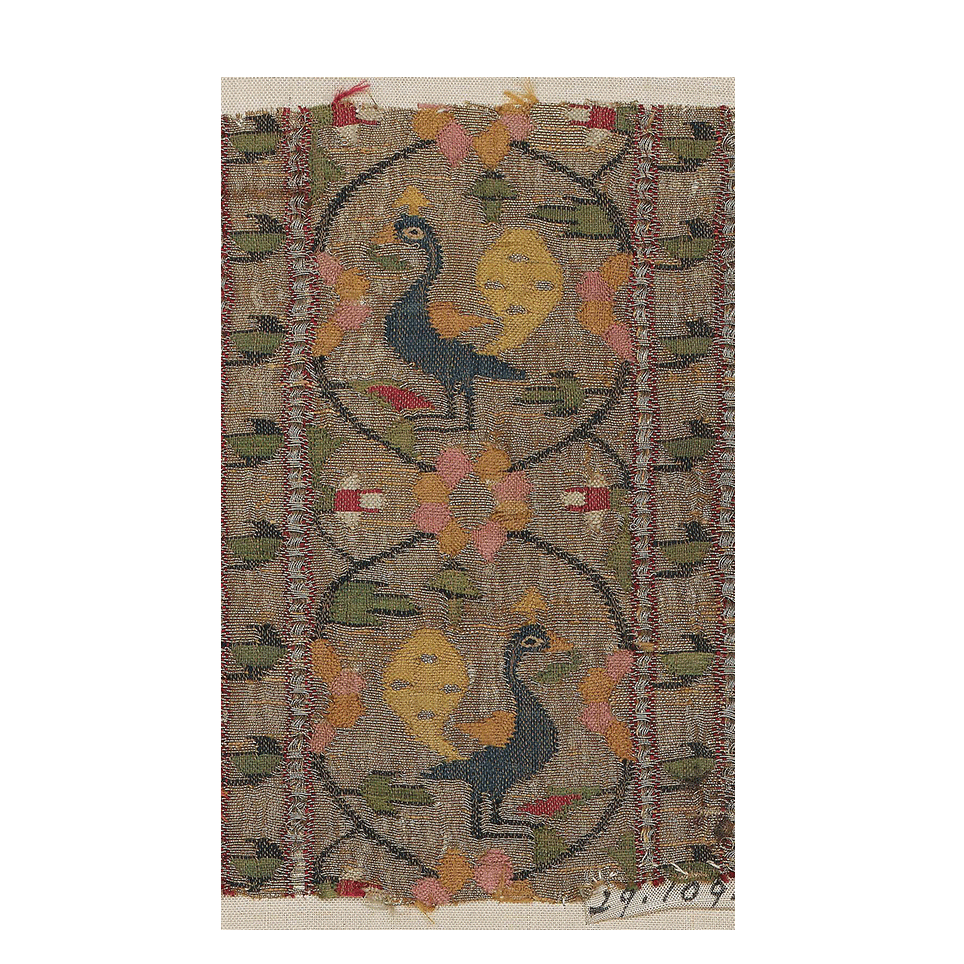
Peacock inspired art, though, have been found in not just textiles but also art from different eras. The Asian Folklore Studies Vol. 33, No. 2 (1974) notes in the article The Peacock Cult in Asia, “The peacock is a recurrent motif in rich ornamentation at the Sanchi stupas. The peacock figures very prominently in the Gateway decorations at Sanchi (second century B.C).” The writer also notes that the peacock was a continued “favourite of artists in stone, sculpture, bronze and terracotta figures. It was accepted in life as an indispensable companion of man, and in art an almost universal motif.”
Parrots
Parrots are prevalent imagery in Deccani art. Rajeev Kinra, a cultural historian of early modern South Asia, says in a historians.org article titled, A 17th century Indian Parrot: Interpreting the Art of the Deccan that, “by the early modern period, parrots had already been a symbol of Indo-Persian storytelling and literary eloquence for centuries, something that would have been known to just about any cultured person in Mughal India or the Deccan Sultanates. Besides being storytellers, parrots were also sometimes thought to have a certain mystical insight and power to predict the future. They were thus associated in the popular imagination with astrological prognostication, especially in certain parts of the Deccan and southern India, where even today one sometimes sees so-called parrot astrologers by the roadside.”
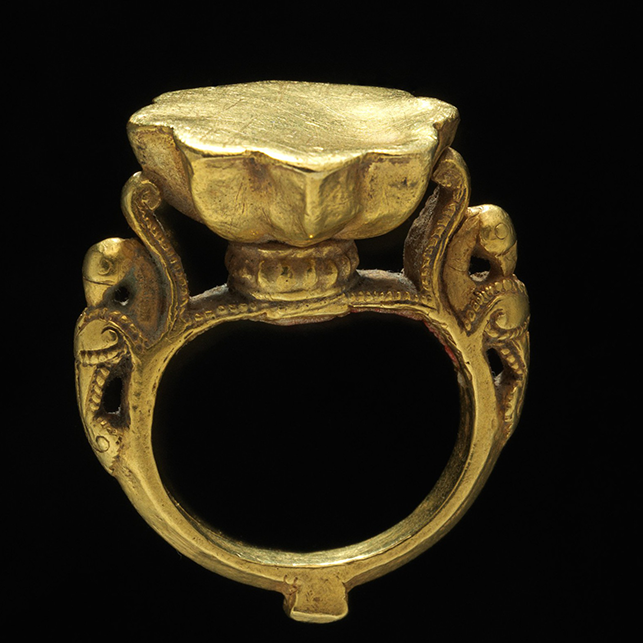
Parrots were also popular motifs in South Indian jewellery and were typically arranged symmetrically, as seen in the image of the ring here, featuring parrots.
Gandabherunda
Gandabherunda is a two-headed bird with supposedly immense magical strength. An emblem of the erstwhile Kingdom of Mysore under the Wodeyars, it is today the official emblem of the Karnataka state government. Gandabherunda has a long history of royal use. In the 1997 paper, “Depiction of Gandabherunda Motif in Vijayanagara Art”, P.N. Naidu says, “The double-headed eagle of Gandabherunda is a well-known symbol of royalty not only in India but also in Babylonia, Cappadocia, Germany, Russia, Austria, Persia, and Ceylon. In India, during the early and medieval periods, the dynasties such as the Kadambas, Chalukyas, Hoyasalas, and the Vijayanagara rulers have had Gandabherunda as a title and as their crest.”
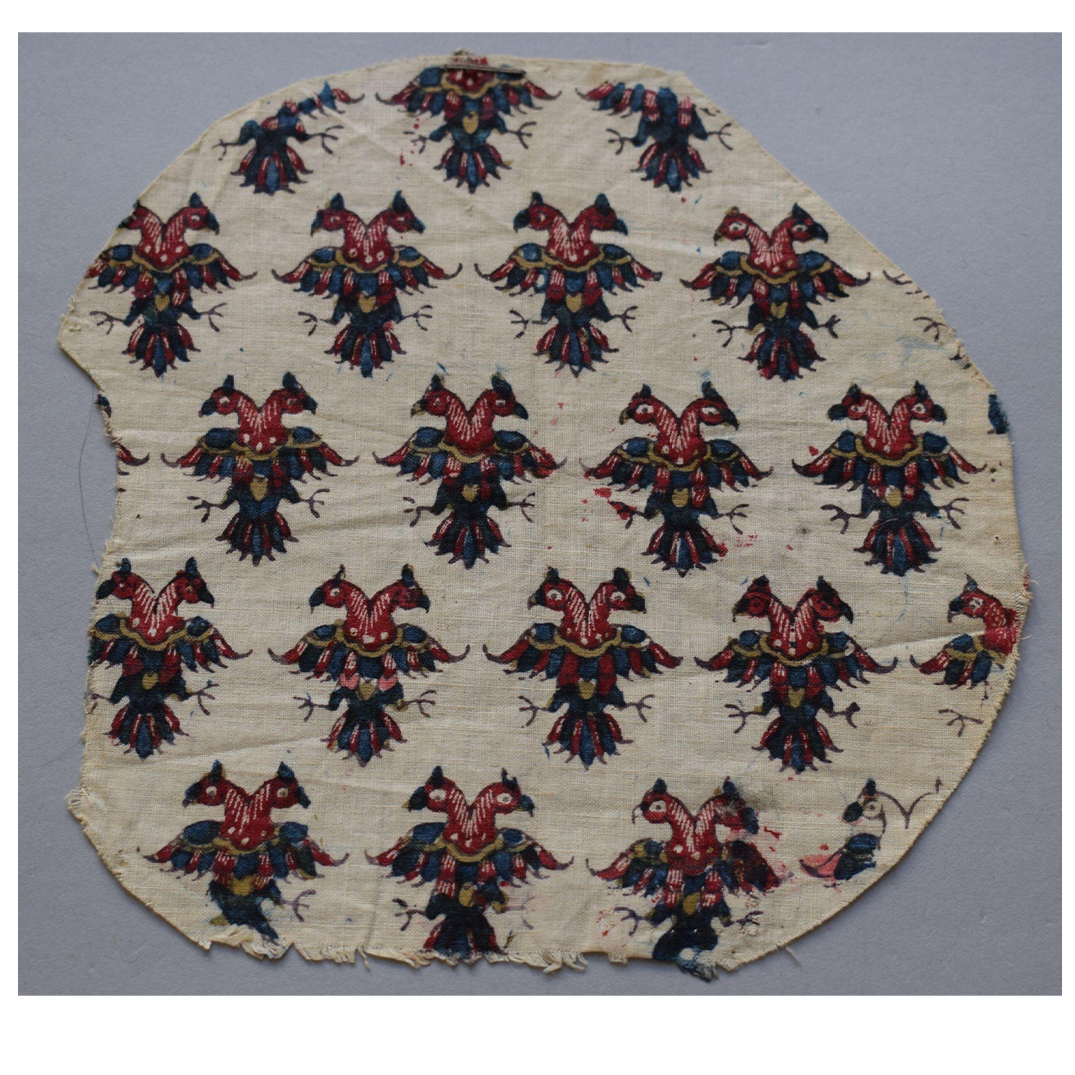
Scholars have suggested different possibilities for the motif’s origin. Naidu talks about some, “Marshall contended that the double-headed eagle appears for for the first time in the Hittite sculptures at Bhogaz Keui and Eyuk in Western Asia… A.H. Sayce traced the double eagle motif to the influence of Egyptian art… A.H. Longhurst presumed that this symbol was introduced in India through Persia.”
While the iconography is more common in Southern India, depiction has been found in other places. In ‘Study of the Military Architectures and Remains of the Shivneri Fort, Maharashtra, India’, N.S. Kulkarni and V Shinde describe a sculpture on a panel of the Ganesh Darwaja of the fort, “The right hand panel of the door depicts the Vyala holding Gandbherud and two elephants. Depiction of Gandbherud was a symbol of Southern Hindu rulers, especially the Vijayanagara dynasty. A similar symbol was also found on the fort gates of Sinhagad, Raigad, Naladurga, etc… Thus depiction of Gandbherud was an indication of victory of Nizamshahi over Vijaynagar rule.”
Yalli
A mythical creature seen in many temples and other architecture of the Deccan and South India, the Yali is a beast described in different ways, including as part lion, part elephant and other similar compositions. A note on Yali on the website of the Rare Book Society of India, “The Yali was a mythical beast with a lion-like head. It sometimes also had an elephant’s trunk and tusks, and leaves coming from its mouth.”
References to the Yali are ancient. In The Vyāla figures on the medieval temples of India, M.A.Dhaky writes, “Its form is too obviously Achaemenian in inspiration. Its early entry into India goes, by common consent, as far back as the Mauryan period. The vyala, at times also known in vastu texts as varala(-ka), virala, and viralika was favoured in the decoration devices of the Andhra-sunga and Kushana Kshatrapa Age as well. Its fresh impact from Scythian sources through the intermediary of Gandhara is equally in evidence. It also figures in creations of Gupta period.”
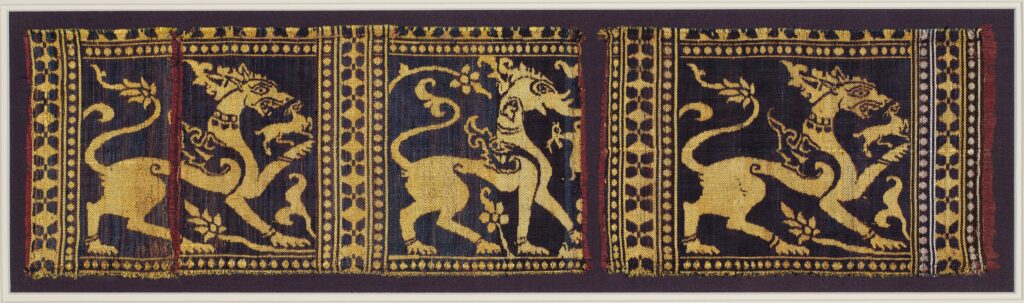
The image of a textile fragment here from the Met Museum showcases the Yali. The fragment is a part of a silk textile composed of fifteen fragments, and it depicts three forms of the Vyala. The description accompanying the object notes that the Vyala is “a mythological creature whose leonine body is combined with parts of other animals. This form had its origins in traditional Indian art, where it was used in architectural settings as a symbolic guard for Hindu temples.”
Hamsa-Laksana
A unique motif found mostly on sarees, the Hamsa-Laksana is also known as the sacred geese. In the journal article, ‘A Hamsa-Laksana Sari’, published in 1927, in Vol. 25 of the Bulletin of the Museum of Fine Arts, the author, A. K. Coomaraswamy, describes the Hamsa-Laksana saree in the collection of MFA and the image here. The author writes, “The hamsa, or sacred goose, is both a real and a mythological animal.”
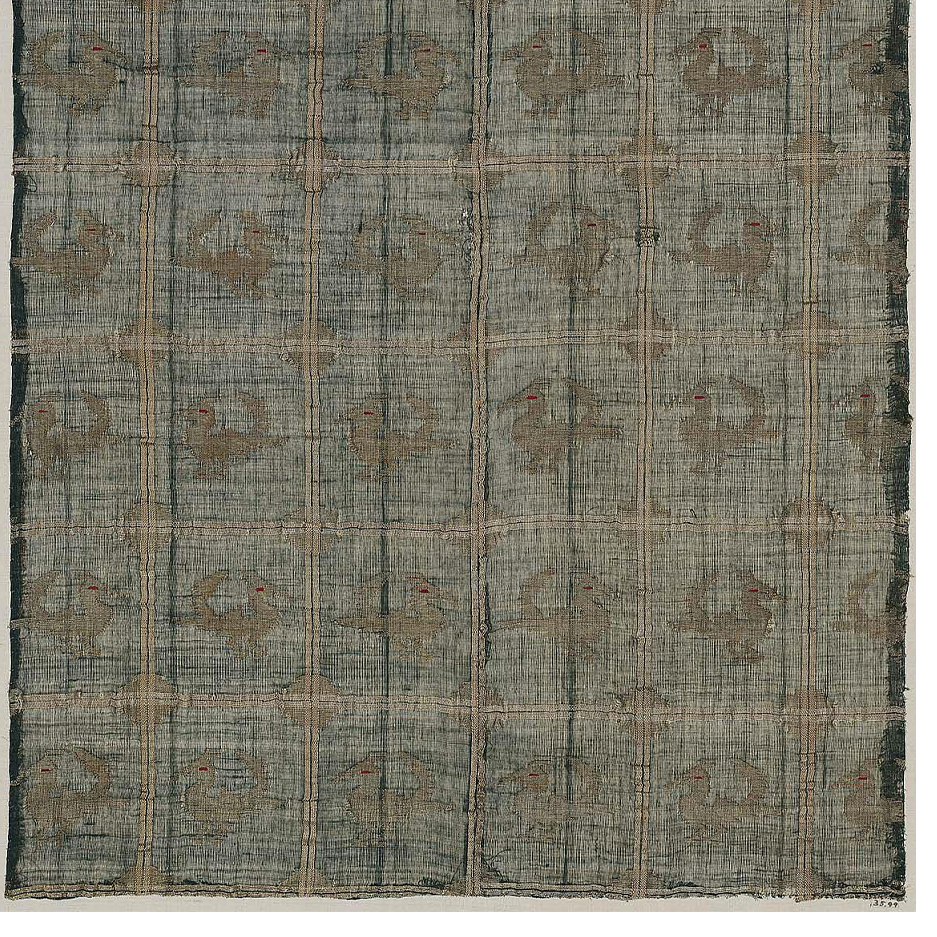
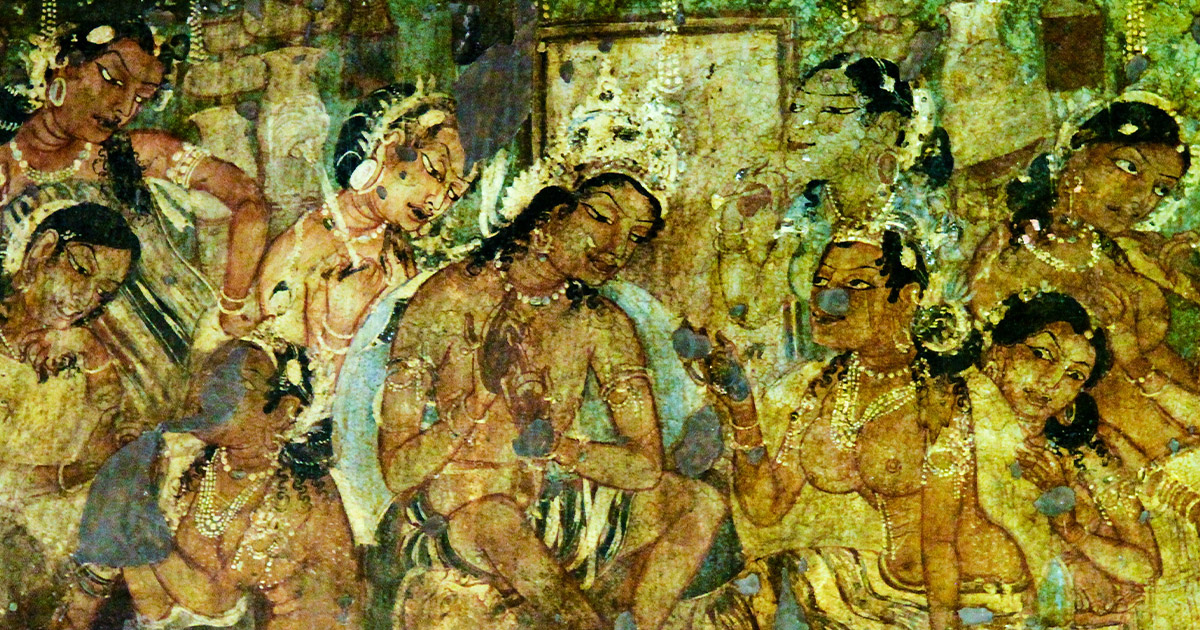
The author also writes about literary and artistic references to textiles with hamsa motifs, “In the Jaina Antagada Dasao, on the occasion of the hair -cutting ceremony, ‘the mother of Prince Goyame received the ends of his hair in a precious swan-figured robe’… In Bana’s Kadambari we read of ‘silken garments, white as the foam of ambrosia, with pairs of hamsa painted in yellow on their hem’… The detail from the Sankhapala Jataka, Ajanta, Cave I, dating from the early seventh century, show very clearly a garment in use, decorated with rows of hamsas.”
Sources:
- McDonnell, S. (2021, October 10). Why Are There So Many Peacocks in India’s Arts, Culture, and Legends? Fodors. https://www.fodors.com/world/asia/india/experiences/news/why-are-there-so-many-peacocks-in-indias-arts-culture-and-legends
- Nair, T.P. (1974). The Peacock Cult in Asia. Asian Folklore Studies, 33(2), 93–170. https://doi.org/10.2307/1177550
- Almuthawa, S. (2015, July 1). A 17th century Indian Parrot: Interpreting the Art of the Deccan. Historians. https://www.historians.org/publications-and-directories/perspectives-on-history/summer-2015/a-17th-century-indian-parrot
- Naidu, P.N. (1997). Depiction of Gandabherunda Motif in Vijayanagara Art. Proceedings of the Indian History Congress, 58, 882–886. http://www.jstor.org/stable/44144041
- Sawant-Kulkarni, N., & Shinde, V. (2015). Study of the Military Architectures and Remains of the Shivneri Fort, Maharashtra, India. Bulletin of the Deccan College Research Institute, 75, 125–134. http://www.jstor.org/stable/26264728
- Dhaky, M.A. (1965). The Vyāla figures on the medieval temples of India. Prithvi Prakashan
- Coomaraswamy, A.K (1927). A Hamsa-Lakshana Sari. Bulletin of the Museum of Fine Arts, Boston, 25(149), 36-37, https://www.jstor.org/stable/4170055
Image Details
- Fragments of a woman’s wrapper (sari), Maharashtra, India, 17th–18th century, MFA
- Ring, 17th century, Attributed to Deccan, Louis E. and Theresa S. Seley Purchase Fund for Islamic Art, The Metropolitan Museum of Art
- Dress Fabric, 1800-1875 (made), India, V&A Museum
- Textile Fragments, 15th-16th century, India, Gift of Michael and Jacqueline Franses, 1993, Met Museum
- Fragments from a woman’s wrapper (sari); probably 18th century; Aurangabad, India; MFA Boston
Warning: Array to string conversion in /home/nbize4ofxrbr/public_html/blog/wp-content/plugins/neori-social-share-buttons/neori-social-share-buttons.php on line 37
Array